Surface roots after stump grinding in Halifax
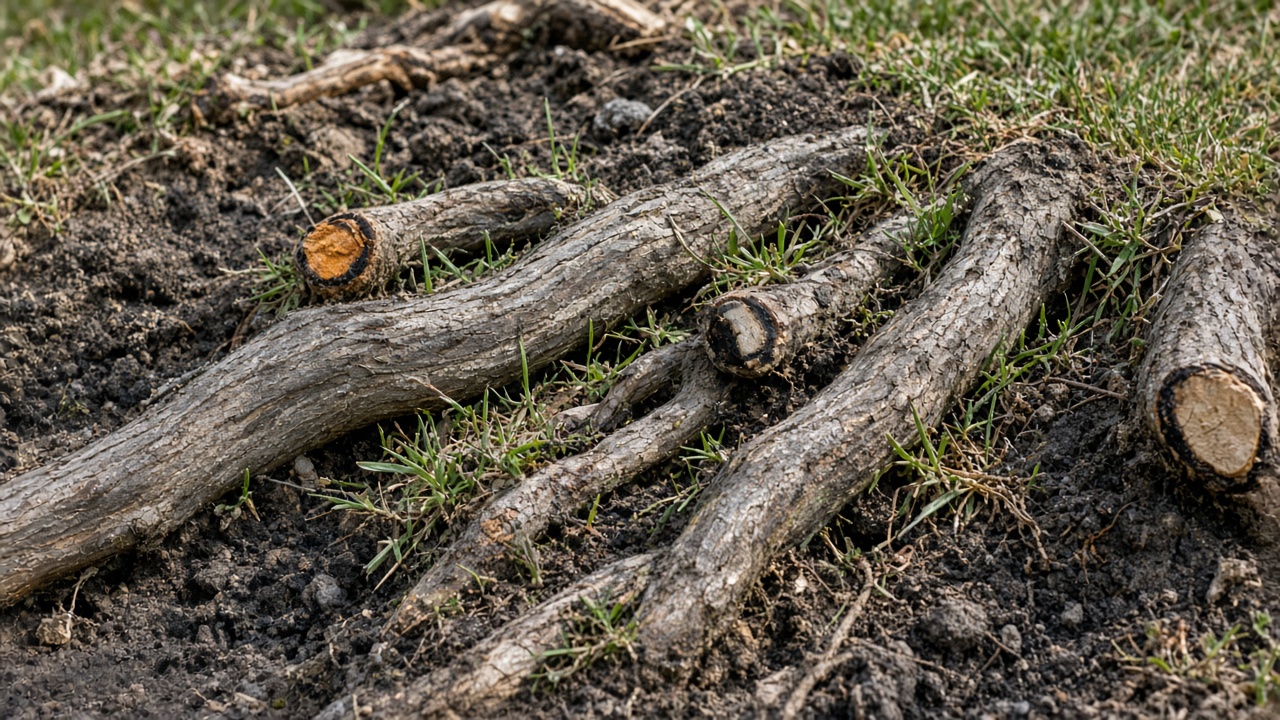
Homeowners often hire stump grinding and then discover a second problem: raised roots that still catch the mower, or a flush of suckers mapping the old root system across the lawn. Root removal in this sense usually means chasing visible surface roots with the grinder or hand tools—not magically erasing every underground root for metres around.
This page covers when surface-root work helps, why suckers return, utilities risks, and when excavating the root ball is the cleaner reset. Ask what is included before you book.
Surface roots vs the full root ball
Surface roots sit near grade where they interfere with turf, paths, or beds. The full root ball is the dense mass under and around the stump. Grinding the stump and nearby surface roots improves mowing. It leaves deeper laterals that can still decay slowly or send shoots. For a building pad, pulling the ball with an excavator removes far more organic mass.
- Chase surface roots when mowing and trip hazards are the issue
- Excavate when structures or stubborn suckering demand it
- Do not grind living-tree roots aggressively if you intend to keep the tree
Utilities first
Stump grinders cut below grade. Public landscaping threads repeatedly warn that buried electric, gas, water, irrigation, and lighting lines are real collision risks. Call for locates. Tell the crew about private lines that locators may miss—landscape lighting, dog-fence wire, irrigation laterals, and septic components on rural HRM lots.
Suckers after the stump is gone
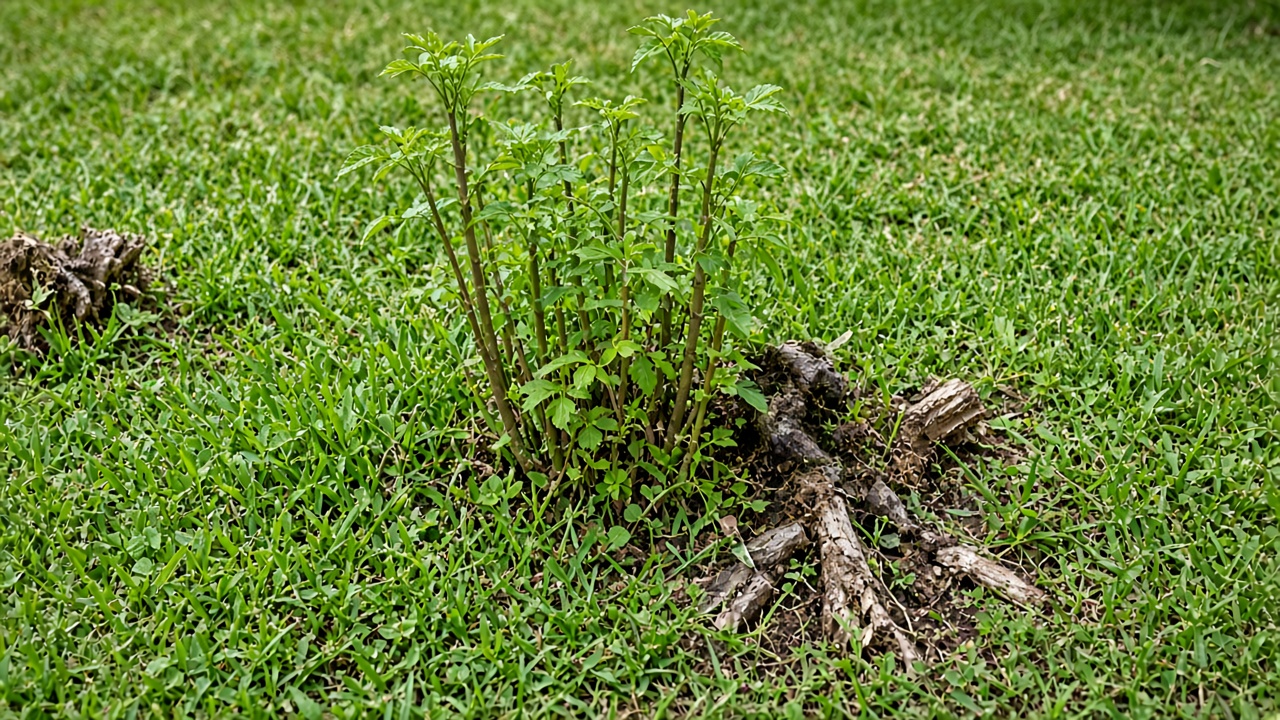
Species such as certain pears, cherries, and some maples keep sprouting from roots after grinding. The practical non-chemical approach is relentless cutting before sprouts leaf out, starving the roots of energy. Some owners use labelled woody herbicides on fresh cuts; follow Canadian pesticide rules and product labels. Excavating major surface roots can shorten the fight when sprouts map a dense network across the yard.
Living trees and lawn conflicts
If roots from a tree you want to keep are destroying turf, grinding those roots can girdle or stress the tree. Arborist advice in public threads often favours mulch beds, soil coverage where appropriate, or accepting that removal plus grind plus excavation is the true reset. Maples in thin soils are frequent surface-root producers.
Hardscape and lifted slabs
Roots under sidewalks or patios are a hardscape problem as much as a grinding problem. Cutting roots without repairing the slab leaves a cosmetic stump of a fix. Coordinate with whoever will replace concrete or pavers.
Aftercare before seeding
Rake, remove excess chips if the seedbed must be soil-rich, add topsoil in low spots, compact lightly, then seed or sod. Expect settling as remaining fines decompose. Under structures, do not rely on chips as structural fill.
Continue with stump grinding basics or chip handling.
How far do surface roots run?
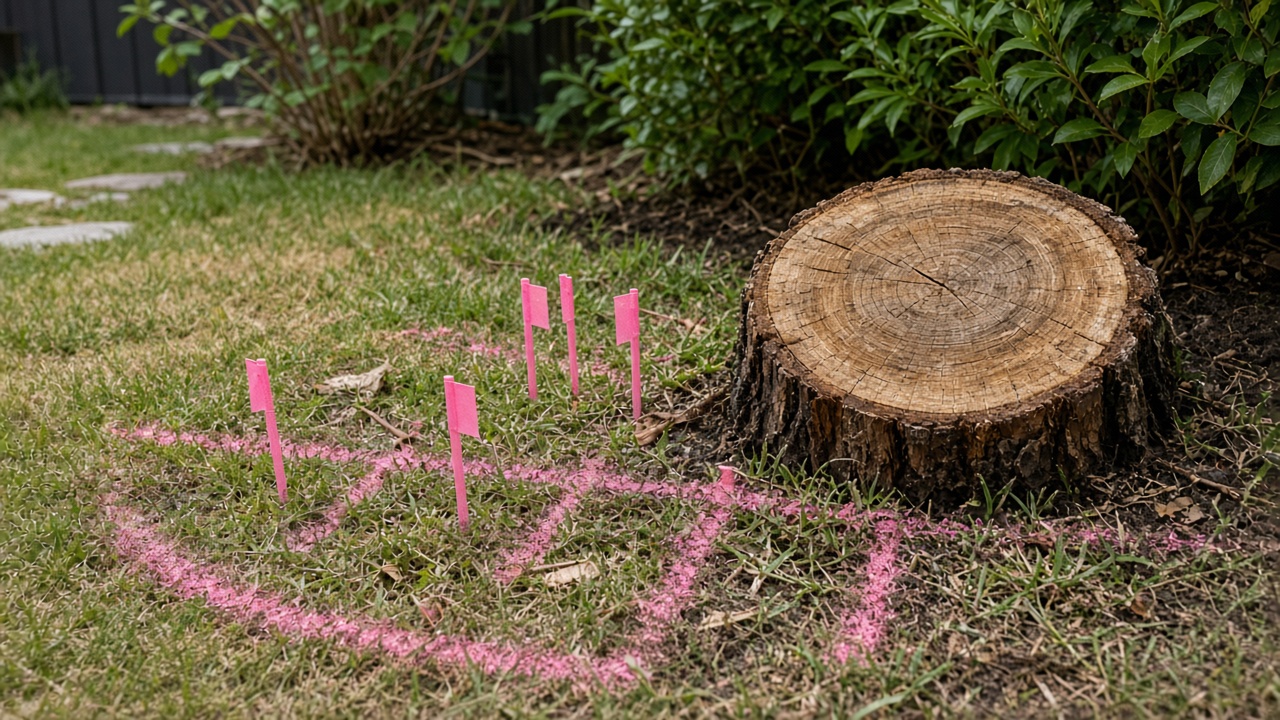
Root systems often extend well beyond the drip line. Grinding what you can see at the stump does not sterilize the whole plate. Sprouts that appear metres away are following living laterals. Mapping sprouts with spray paint before a chase day helps the operator know where to spend time—and where excavation would be overkill for a lawn repair.
Herbicide and non-chemical options
Public lawn-care threads discuss painting fresh sprout cuts with labelled woody herbicides and repeating through the season. That is a homeowner or licensed applicator decision, not something this draft brand claims as a packaged service. Non-chemical exhaustion—cutting sprouts before they leaf—works but demands consistency. Boiling-water and folk methods appear in forums with mixed results; treat them as experiments, not guarantees.
Root barriers and hardscape edges
Where a living tree must stay beside a driveway or walk, some projects combine selective root cutting with a root barrier along the hardscape edge. That is specialized work and can stress the tree. Get arborist input before cutting major structural roots on a tree you intend to keep. For trees already condemned, full removal plus grind plus surface chase is cleaner than years of fighting sprouts through turf.
Sandy soils, thin topsoil, and HRM yards
Thin topsoil over till pushes roots toward the surface for oxygen and moisture. After grinding, adding soil volume and mulch rings (kept off trunks) can reduce future surfacing compared with leaving bare, compacted grade. Regrading low spots after chip settlement prevents mower scalping that exposes more roots.
Quote line items for root work
- Stump grind depth and diameter assumptions
- Linear extent of surface-root chasing included
- Whether hand digging of major laterals is included
- Chip handling after the chase
- Seeding or soil supply
If a quote only says “grind stump,” assume surface roots are extra. Put the chase in writing. Utility locates should be listed as a prerequisite, not an afterthought.
When to stop and excavate instead
If sprouts return densely after a season of grinding and cutting, or if you are building soon, excavating the remaining root mass can be cheaper than another year of labour. Mini-excavators pull what grinders leave. Backfill with inorganic fill under structures; garden soil is for planting beds, not slabs.
Coordinating with lawn renovation
Root chasing tears turf. Pair the visit with a lawn renovation plan: remove excess chips, bring grade to level, and seed or sod in one campaign. Doing roots in autumn and forgetting soil until spring leaves a muddy scar that invites weeds. If you are installing irrigation later, mark future trench lines so the grinder does not chew through planned corridors twice.
Pets, kids, and safety after root work
Fresh cavities and chip piles are attractive nuisances. Fence or supervise until the grade is stable. Sharpened root ends and rocks thrown by the wheel are hazards. Ask the crew to rake a walkable finish even if haul-away is not included. Keep the written safety expectations simple and visible on the quote.
Documenting before and after
Photograph the lawn before chasing roots and again after raking. If suckers return, new photos help decide whether another chase or excavation is warranted. Documentation also helps when selling a home—buyers ask what happened to the old tree and whether roots remain under planned additions.
Final decision framework
If the stump is gone, mowing is still awkward, and sprouts keep returning, budget a dedicated root-chase day or excavate. If the stump is gone and the lawn is fine aside from a settling spot, add soil and move on. If you are building, stop grinding thinking and pull organics. Matching the next property goal to the root strategy saves more money than any per-inch trick.
Root removal FAQs
Can I remove exposed surface roots with a stump grinder?
Often yes for roots in soil, but call utility locates first — grinders cut deep enough to hit buried lines.
After stump grinding, roots still send up sprouts — what now?
Grinding does not erase the whole root network. Repeatedly cut sprouts before they leaf out; some owners use labelled herbicides on fresh cuts or excavate major surface roots. Follow Canadian pesticide rules if chemicals are used.
Do tree companies remove protruding roots with grinding, or is that extra?
Surface-root chasing is frequently an add-on, not automatic with a basic stump grind — ask explicitly.
Will grinding roots under a sidewalk fix lifted concrete?
Grinding addresses stump and near-surface roots in soil; lifted slabs usually need hardscape repair coordinated with root cutting.
Should I grind surface roots of a living tree to save the lawn?
Aggressive root grinding around a living tree can harm or kill it. Covering with soil or mulch or redesigning beds is often safer; removal plus grind plus excavate is the reset option.
Are maples especially bad for surface roots?
Some maples are prolific surface-root producers in thin soils; expect ongoing management if the tree stays.
Will leftover roots eventually make the yard sink?
Large decaying roots can leave voids and dips over years. For lawns this is usually manageable with top-ups; under structures it is a bigger risk.
Is digging out the whole root ball better than grinding roots?
For building pads and to minimize future suckers and settling, excavating the root ball is more thorough; grinding is the lighter lawn option.
Can I use a Sawzall or bar instead of a grinder on surface roots?
Hand tools can nick small exposed roots; large interlocking roots usually need a grinder or excavation.
What should I do after roots are ground before seeding?
Rake, remove excess chips if needed, add topsoil where low, compact lightly, then seed or sod and expect additional settling as fines decompose.