Stump grinding in Halifax and area
Private-property grinding with clear scope: access, depth, chips, and what you plan to do with the spot afterward.
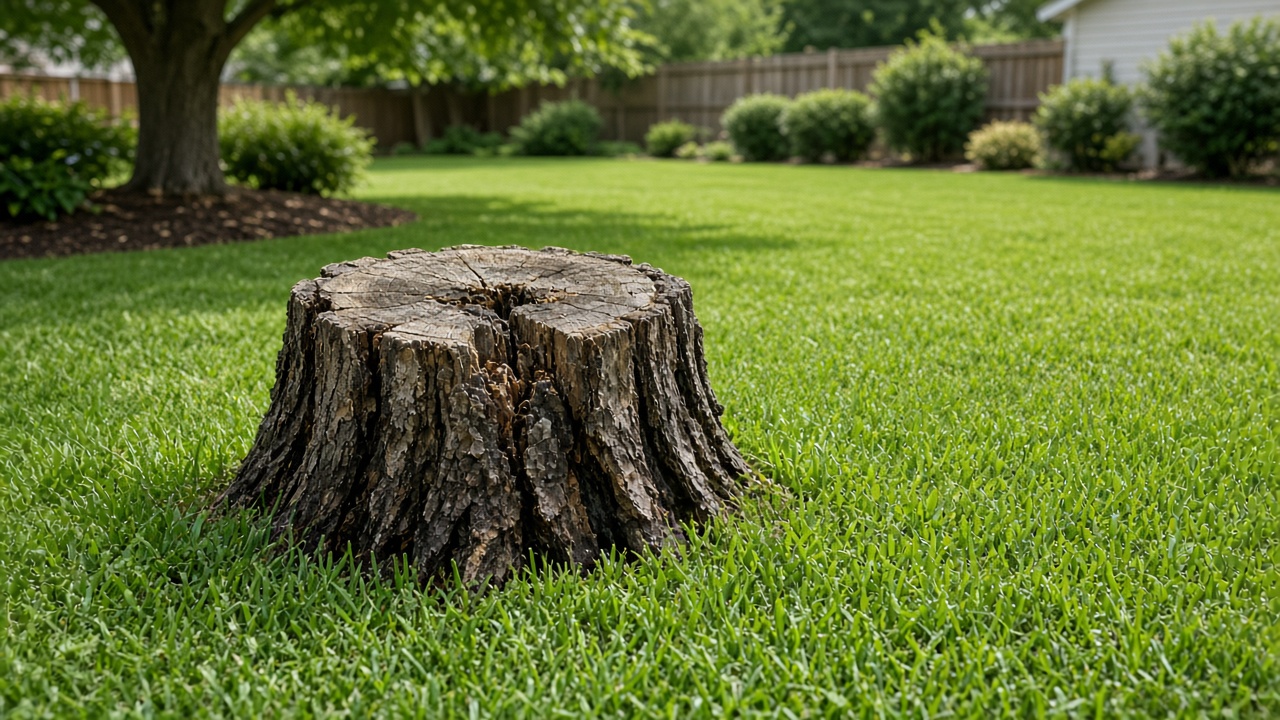
A tree comes down, the wood gets hauled, and the stump sits there. In Halifax that leftover often means weaving a mower around a hard edge, watching maple suckers pop through the lawn, or delaying a patio because nobody wants to pour concrete over rotting wood. Call or request a quote with photos, stump count, access notes, and whether you want chips left or hauled.
What grinding covers
Grinding uses a high-speed cutting wheel to chip the stump—and often nearby surface roots—to a depth you agree in writing. Chips mixed with soil stay in or beside the hole unless haul-away is included. Full stump removal digs the stump and major roots with an excavator. Grinding is usually faster and kinder to lawns. Excavation fits better under driveways, slabs, foundations, and building pads because leftover wood can rot and settle.
Tell us whether the goal is mowing, a garden bed, new planting, or a larger hardscape project. That end use drives depth and whether grinding alone is enough.
- Good fit: open lawn, ornamental beds, play areas, sale prep, most residential replanting
- Ask about excavation: structural fill under concrete, strict organic-free envelopes
Access and site constraints
Machine size follows the narrowest entry. Measure gate or side-yard width, note steps, slopes, fences, and nearby structures. Mention visible surface roots and any known buried services. Tight peninsula and Dartmouth lots often need a compact grinder; open driveways allow larger equipment. The crew confirms what fits before the visit.
What changes a stump grinding quote
Pricing depends on more than diameter. Ask for the same details on every written estimate so scopes stay comparable.
- Diameter at ground level and stump count
- Hardwood versus softwood and root flare
- Gate width, slopes, and machine access
- Desired grind depth and surface-root chasing
- Chip leave, spread, or haul
- Travel across the HRM and any job minimum
- HST and whether backfill or seed are included
Sample photo and quote checklist
Use this labelled checklist when you request a quote—ours or anyone else’s. It is not a real quote for your property. Photos are optional; “not sure” is fine for measurements.
- Clear view of each stump (two angles help)
- Measurement or scale reference at ground level
- Photo showing the approach path and gate
- Stump count and community (Halifax, Dartmouth, Bedford…)
- Chip preference: leave, spread, or haul
- Planned use of the spot: lawn, planting, patio, driveway
- Notes on slopes, fences, steps, or buried lines if known

Cleanup and finishing
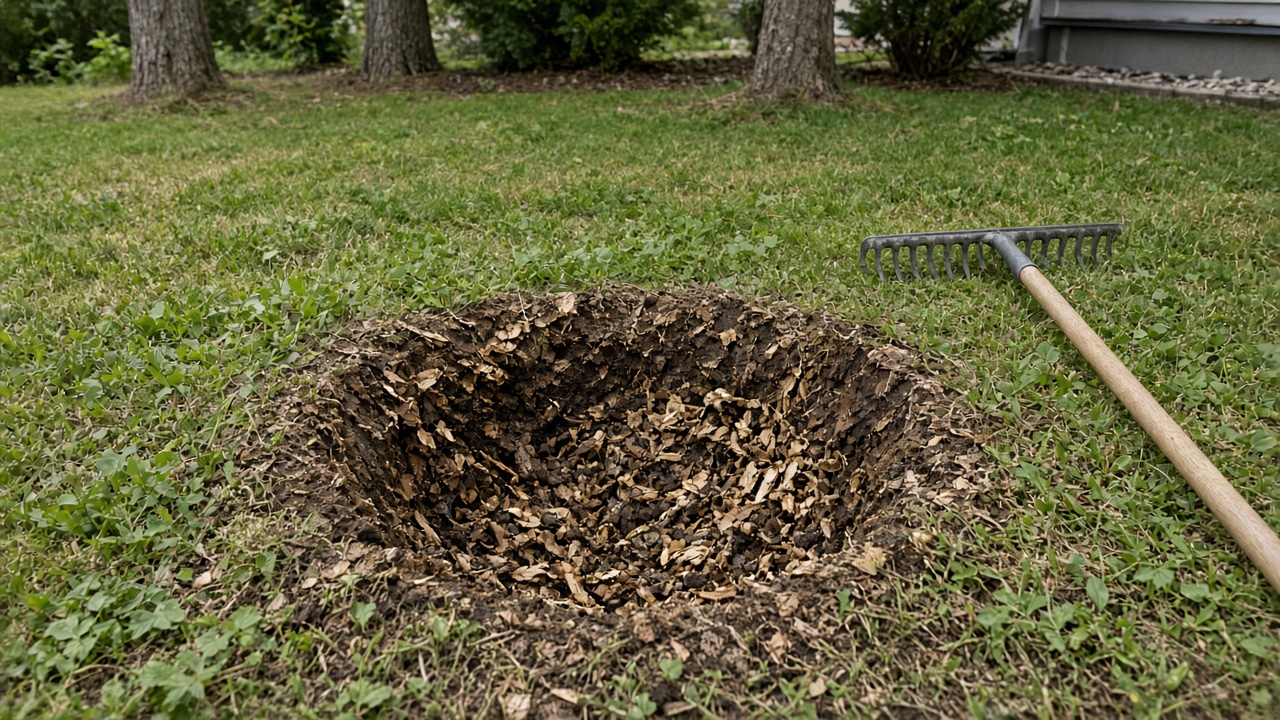
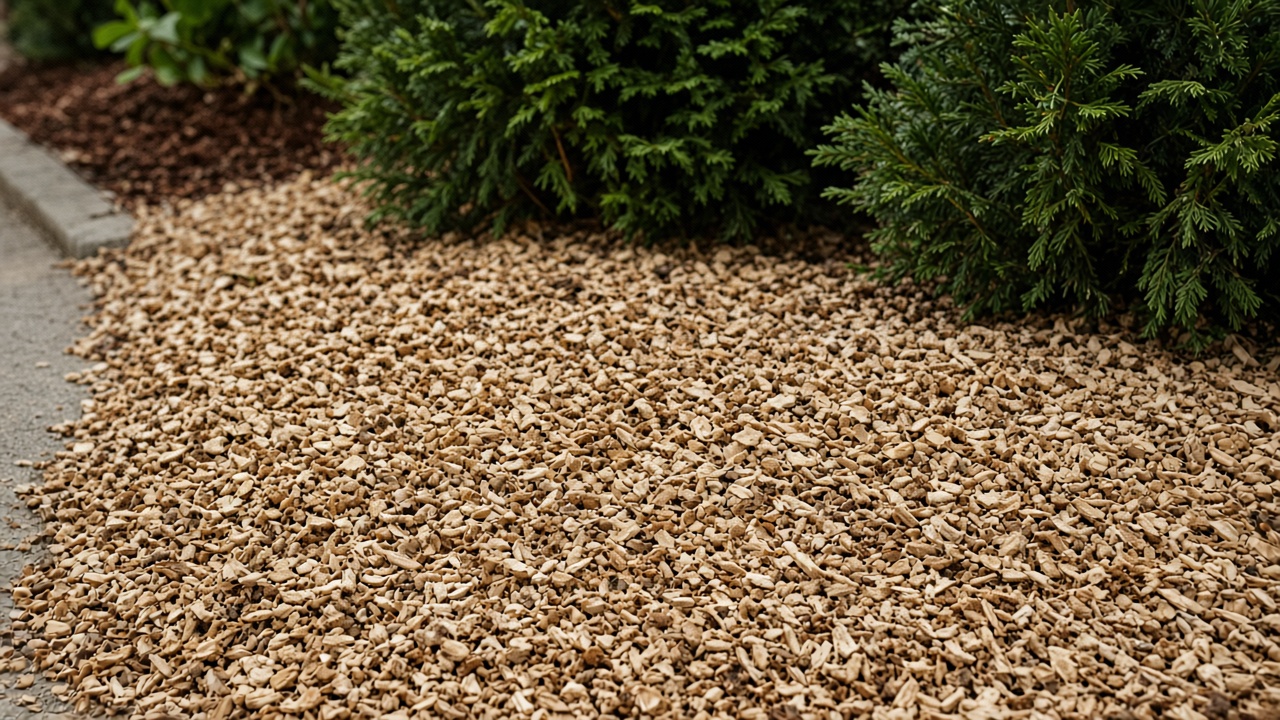
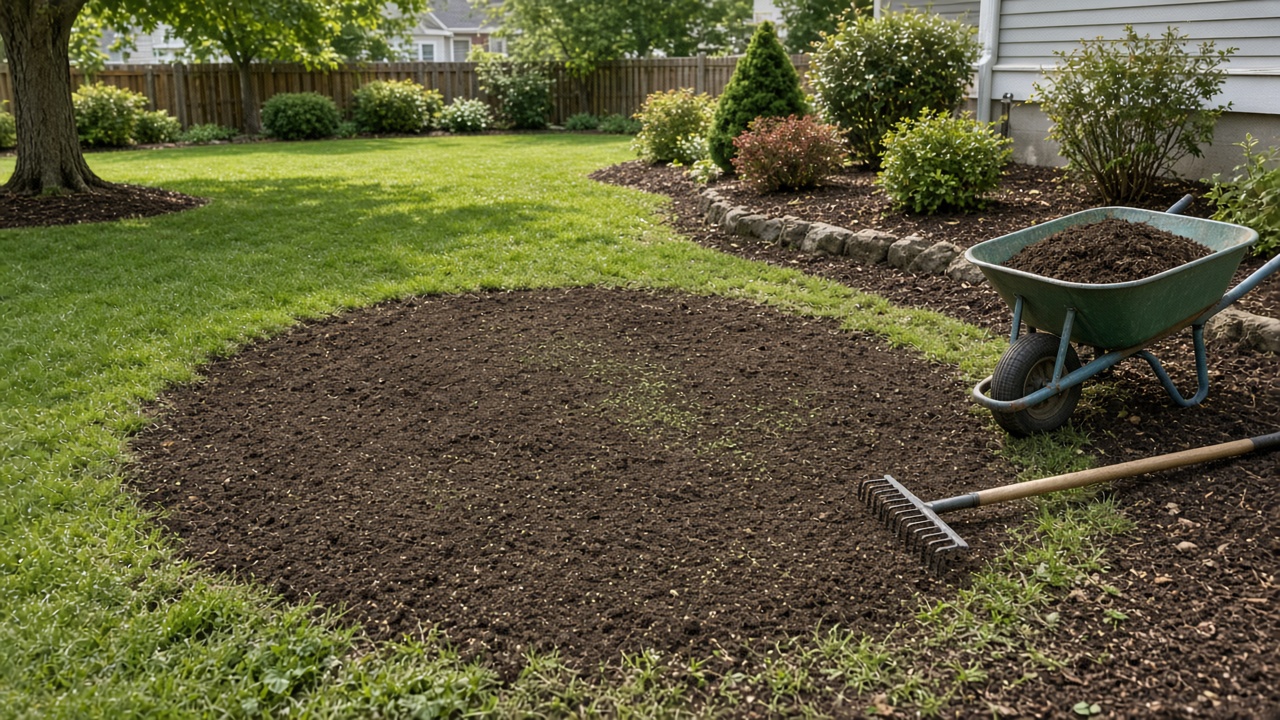
Homeowners are often surprised by chip volume. Confirm in writing whether chips stay in the hole, pile for mulch, get spread, or leave the site. Levelling, soil top-up, and seed are separate finishing choices. Fresh chip piles are a poor place to expect instant lush lawn; as chips decompose the area can settle, so plan to top up soil over seasons.
Read the mulch and cleanup guide for keep-versus-haul tradeoffs.
Surface roots, multi-stump lots, and process
Grinding removes the stump mass. It does not erase the entire underground root network. Some species keep sending shoots for a season or more. Surface-root chasing is often an add-on. Living trees with aggressive surface roots need a different conversation.
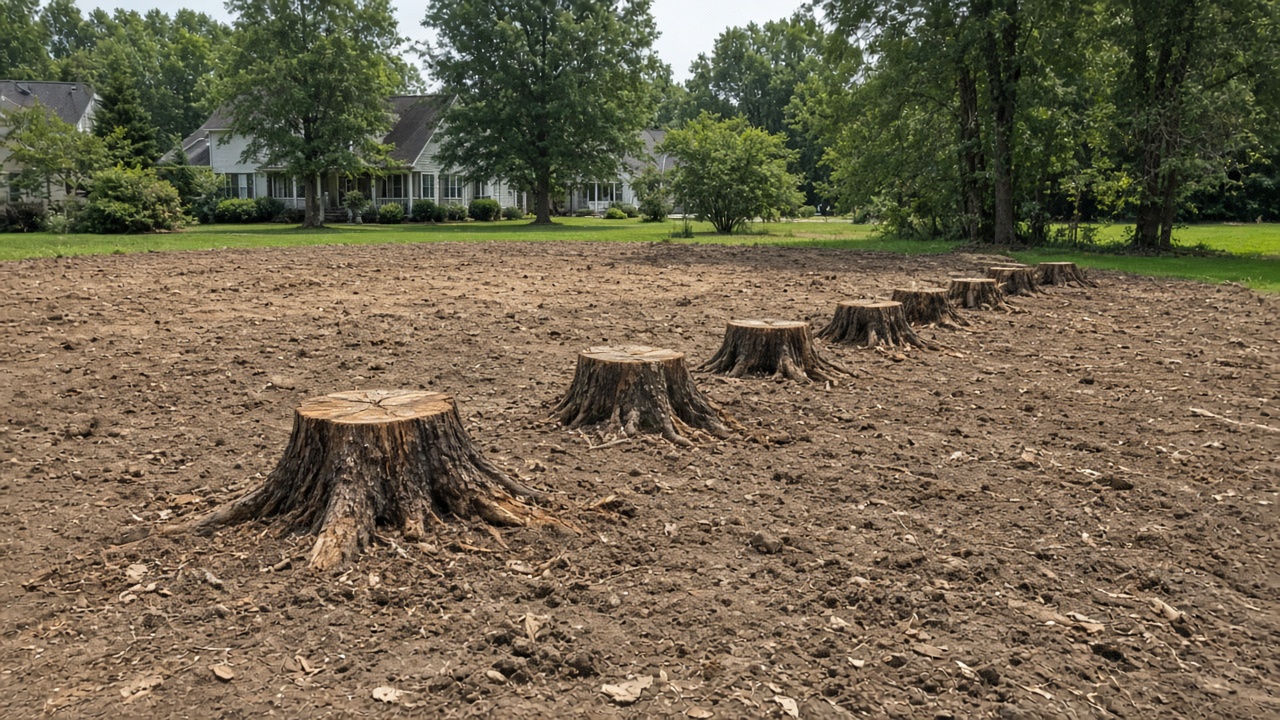
When several stumps share one mobilization, pricing often shifts from pure per-stump math to a package feel. That helps after a property clear or storm cleanup. It is not the same as excavator land clearing for a house pad.
- Assessment — stump count, diameter at grade, access, utilities awareness, chip preference, end use
- Prep — clear loose rock; protect turf or hardscape; arrange locates near buried lines
- Grind — machine sized to the gate and yard
- Finish — rake; chips left, spread, or hauled as scoped
Root removal · Land clearing · Stump grinding

Municipal property and buried infrastructure
Halifax Regional Municipality protects public trees under By-law T-600. A public tree is one whose majority of trunk sits on municipal land. If a stump may be municipal or you are unsure about a boulevard or right-of-way, contact Halifax 311 before commissioning private work.
Grinders cut below grade. Follow Halifax Water’s Click Before You Dig guidance for public utility locates, and tell the crew about private lines such as septic, irrigation, and landscape lighting. Who arranges which locate depends on the job—confirm before the machine arrives.
Halifax and HRM coverage
We focus on private-property stump grinding in Halifax. Ask when you call about Dartmouth, Bedford, Sackville, Fall River, and other HRM communities for your job.
Stump grinding FAQs
What does stump grinding include on a Halifax property?
Grinding chips the stump (and often nearby surface roots) to an agreed depth below grade. Chips may be left, spread, or hauled depending on the quote. It does not excavate the full root ball.
Is stump grinding necessary, or can I leave the stump?
Not mandatory. Grinding is mainly for aesthetics, safer mowing, and replanting. Flush-cut stumps can sit for years while they decay and may send up suckers you can clip. Grind when you want the obstacle gone on a useful timeline.
Should I rent a stump grinder or hire someone?
For one medium or large stump, hiring a crew with a commercial machine is often similar money to a day’s rental after transport, learning time, and cleanup—and much faster. Rentals can make sense for many small stumps if you get a sufficiently powered tracked unit and inspect the teeth first.
Will the company haul the wood chips, or do they leave a pile?
Many quotes leave chips unless haul-away is written in. Confirm in writing: leave in the hole, pile for mulch, spread, or remove. Large stumps create surprisingly big piles.
What affects the cost of stump grinding?
Quotes usually change with diameter at ground level, stump count, hardwood versus softwood, gate width and access, grind depth, surface-root chasing, chip haul or leave, travel across the HRM, and any job minimum. Ask for those details in writing so scopes stay comparable.
What’s the difference between stump grinding and stump removal?
Grinding chips the stump below grade in place. Full removal excavates the stump and major roots. Grinding is usually faster and gentler on lawns; excavation is better when organics must not remain under driveways, slabs, or building pads.
Do I need a permit to remove a stump on my Halifax property?
Stumps from trees fully on private property generally do not need HRM’s public-tree permit. Public trees (majority of trunk on municipal land) and work that could affect them fall under By-law T-600 and need municipal permission—call 311 if unsure.
How long does HRM take to remove a city tree stump?
For municipal trees, HRM publishes a stump-removal service standard of up to three years (weather and workload can change timelines). Private contractors are a separate option for private-property stumps.
Can stump grinding damage underground utilities?
Yes—grinders cut below grade. Arrange utility locates before grinding near known lines, and tell the crew about septic, irrigation, and lighting cables. Halifax Water publishes Click Before You Dig guidance for public utilities.
What should I send for a quote?
Clear photos of each stump, a measurement or scale reference at ground level, a photo of the approach path, stump count, chip preference, and what you plan to do with the spot afterward. Not sure is fine for measurements—photos still help.
Services
Stump grinding
Below-grade grinding for residential stumps, with depth matched to lawn, planting, or hardscape plans.
Root removal
Surface-root chasing after grinding, utilities caution, and honest talk about suckers.
Land clearing
Multi-stump grinding for yard reclaim—and when excavator grubbing belongs on a pad.
Mulch & cleanup
Leave, spread, or haul grindings—with realistic lawn recovery expectations.